Investigation
Republikorp and the Defence Ministry's 55,000 Rifles
In eight months one private Indonesian company imported assault rifles from Qatar, Turkey, China and the United States. The declared price was almost the same every time. The one exporting country whose records can be checked puts its rifles at about half that.
, [CC BY-SA 4.0](https://creativecommons.org/licenses/by-sa/4.0/)](/articles/republikorp-defence-ministry-rifles/silk-way-west-freighter.jpg)
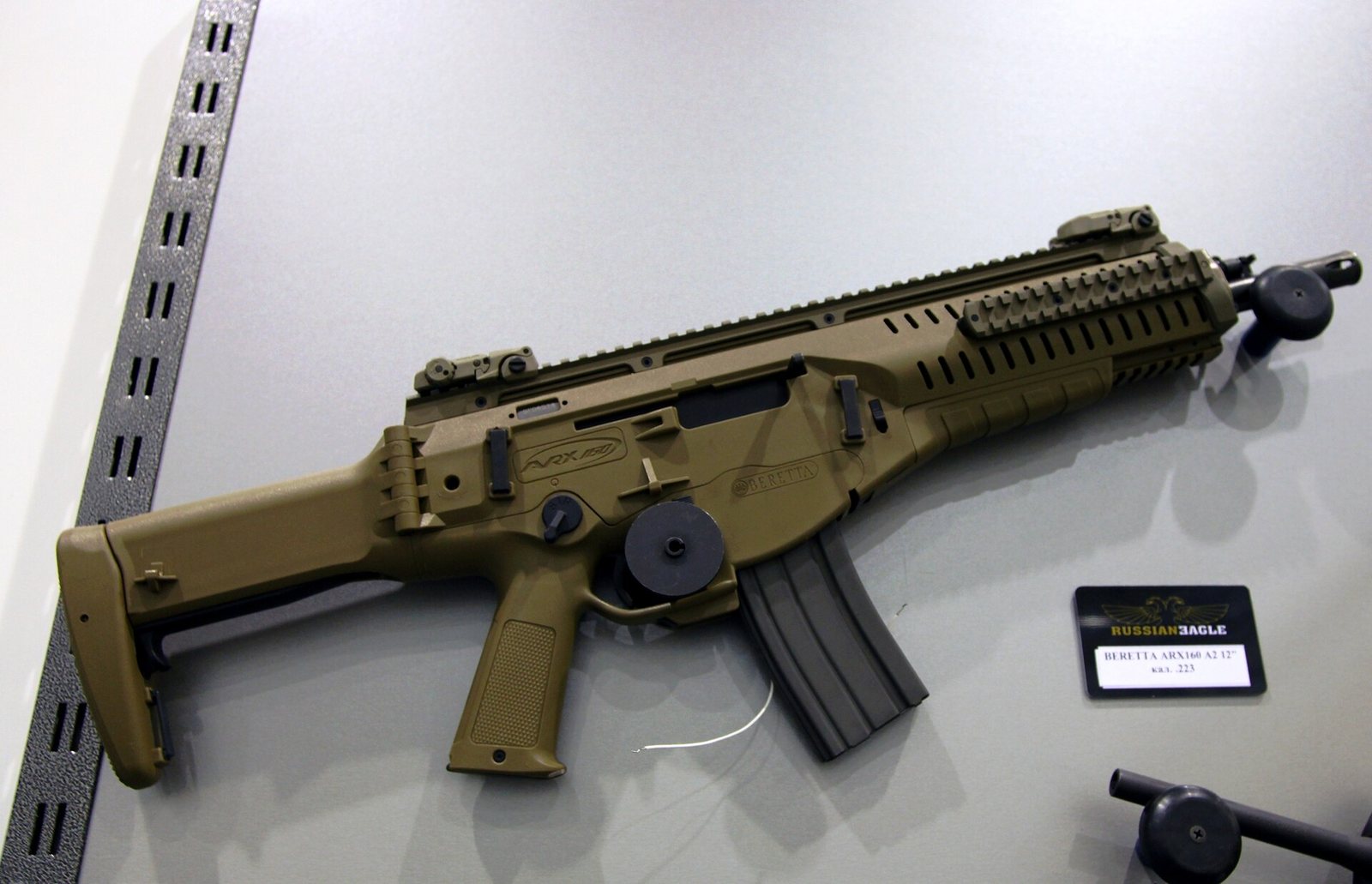
On 22 August 2025 a Silk Way West Airlines freighter from Doha landed at Soekarno-Hatta with 16,240 assault rifles. Another 3,760 followed on Qatar Airways on 2 September. The importer was PT Republik Armamen Industri, part of the Republikorp group. The seller was Barzan Holdings, the defence company owned by Qatar’s Ministry of Defence. On the Indonesian customs declarations the 20,000 rifles were worth US$36 million, or US$1,800 each.
Qatar recorded the same shipment. Its export statistics for August 2025 show 20,000 units of firearms leaving for Indonesia, weighing 111,654 kilograms and worth 70,252,000 riyals. At the riyal’s fixed rate that is US$19.3 million, or US$965 a rifle.
Both governments are describing the same 20,000 rifles. Indonesia’s figure is 1.87 times Qatar’s, a difference of about US$16.7 million.
Over the next eight months the same company imported three more lots of rifles: from Turkey, from China and from the United States. The makers have nothing to do with one another. The declared price barely moved. It was US$1,900 a rifle from Turkey, US$1,807 from China and US$1,900 from the United States.
In 2025 the Defence Ministry paid PT Republik Armamen Industri Rp 2.98 trillion, about US$180 million. The year before, it had paid the company nothing.
What Qatar says it shipped
The rifle is the ARQ-160, a version of Beretta’s ARX160 made under licence in Qatar. Barzan Holdings has only three lines in the Indonesian customs data, so each can be set against Qatar’s monthly export figures.

| Goods | Indonesia declared | Qatar recorded | Ratio |
|---|---|---|---|
| 20,000 ARQ-160 rifles, to PT Republik Armamen Industri (Aug–Sep 2025) | US$36,000,000 | US$19,300,000 | 1.87× |
| 3,800 KMA556 upgrade kits, to the Defence Ministry (Oct 2025) | US$7,862,200 | US$7,862,200 | 1.00× |
The second line is the control. A few weeks later Barzan sent the Defence Ministry 3,800 kits for upgrading old M-16 rifles. The ministry itself was the importer. Indonesia declared US$7,862,200. Qatar recorded 28,618,408 riyals, which is US$7,862,200. The two records agree exactly.
So Qatar’s statistics do capture Barzan’s sales to Indonesia at full value. When the ministry bought directly, the two countries’ figures were identical. When a private company bought, the Indonesian figure was nearly double.
Two objections are worth answering.
The Indonesian value might include extras. Qatar’s weight works out at 5.6 kilograms a rifle. An ARX160 weighs about three kilograms, and a case, magazines and packing account for the rest. There is no room in that weight for much else. The company’s sights, suppressors and thermal scopes arrived separately, on their own customs lines.
Freight and insurance. Qatar’s value is taken at its border and Indonesia’s includes carriage. Air freight on 112 tonnes costs a few hundred thousand dollars. The gap is US$16.7 million.
The same price, three more times
Between February and April 2026 the company brought in three more lots.
| Arrival | Seller | Rifles | Declared value | Per rifle | Exporter’s record |
|---|---|---|---|---|---|
| 22 Aug, 2 Sep 2025 | Barzan Holdings, Qatar | 20,000 | US$36.00M | US$1,800 | US$19.3M (US$965) |
| 25 Feb – 24 Apr 2026 | Mertsav Savunma, Turkey | 5,400 | US$10.26M | US$1,900 | Cannot be tested |
| 24 Apr 2026 | China North Industries (Norinco) | 10,000 | US$18.07M | US$1,807 | Cannot be tested |
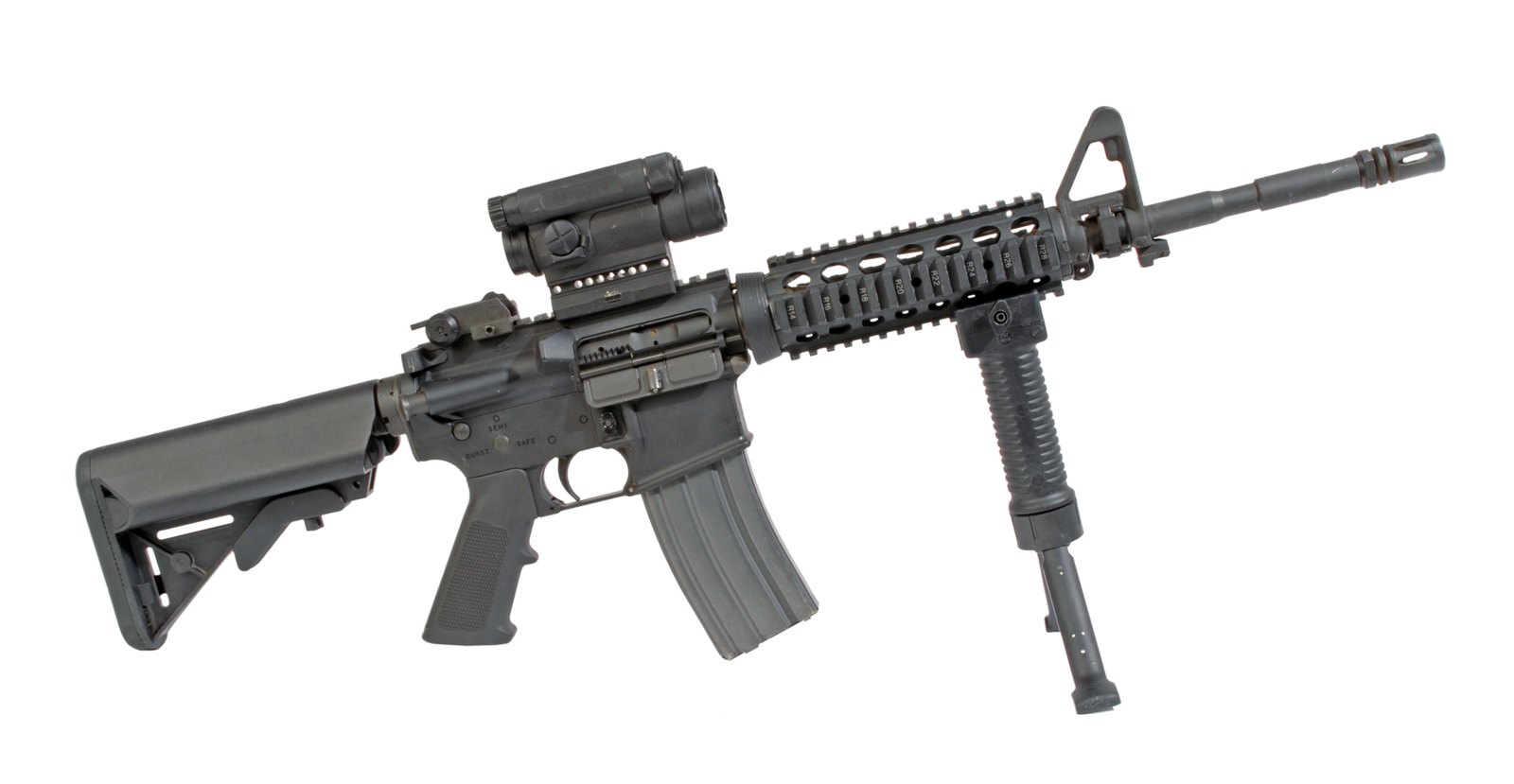
| 29 Apr 2026 | Colt Manufacturing, United States | 20,000 | US$38.00M | US$1,900 | No such export recorded |
| Total | 55,400 | US$102.3M | US$1,847 |

The Turkish rifles came in six consignments by air from Ankara. Each one is priced at exactly US$1,900 multiplied by the number of rifles. The Chinese rifles came by sea from Shanghai and are declared as “unbranded”. The Colt rifles came by air from New York’s JFK airport: 95 tonnes on a single customs line.
The three 2026 lots are described in almost the same words on the Indonesian declarations. All three are 5.56 mm assault rifles of “AR type”, and the Turkish and American ones are also called “standard”. The wording suggests one requirement filled by three suppliers.
A rifle from a state factory in China and one from Colt in Connecticut would not normally cost the same. One published contract suggests what a rifle of this kind costs in bulk. In February 2013 the US Army awarded FN Manufacturing a contract worth up to US$76.9 million for up to 120,000 M4 and M4A1 carbines, which is about US$640 each. Export sales cost more than that, since they are smaller and carry spares and training. Even so, Qatar’s US$965 sits much closer to that figure than US$1,800 does.
What the United States recorded
The United States publishes arms exports in detail, by month and by ten-digit product code. Small shipments of rifles, pistols and parts to Indonesia appear every month.
Under the code for military rifles, US exports to Indonesia were US$40,088 in 2024 and US$25,950 in 2025. For January to August 2026 the figure is zero. In April 2026, the month the Colt rifles are declared as arriving, all US arms and ammunition exports to Indonesia came to about US$1.8 million. Indonesia declared US$38 million for this one consignment.
The US data are not blind to Indonesia. In September 2025 an Indonesian import of rifle accessories from Magpul, declared at US$569,345, appears in the US figures at US$569,345.
A second purchase by the same company can be matched. On 5 February 2026 PT Republik Armamen Industri imported 5,000 rifle suppressors from B&T USA, declared at US$7.0 million. The US figures for January show a shipment of military rifle parts to Indonesia by air, of comparable weight, worth US$3.4 million. If it is the same consignment, Indonesia declared about twice the US value.
There are innocent explanations for the missing Colt rifles. The first is that they were made outside the United States and passed through JFK in transit, which would keep them out of US export figures. Colt has been owned since May 2021 by the Czech group now called Colt CZ, and it has a Canadian subsidiary, Colt Canada. I checked both countries. Canada reported no arms exports to Indonesia in February or March 2026 and about US$12,000 in April. The Czech Republic reported about US$442,000 in April and a few thousand dollars in the other months. Neither is anywhere near US$38 million.
The export may also have been filed late or under another code. Or the Indonesian declaration may name the wrong seller.
There is one more place such a sale should appear. A licence to export military firearms worth US$1 million or more must be notified to Congress, and the State Department publishes the notices. Those published so far run from April 2024 to 13 March 2026. They contain one firearms sale to Indonesia: 7.62 mm fully automatic weapons, notified on 25 September 2024. None covers 5.56 mm rifles. Notices sent after mid-March 2026 have not yet been published, so a late notification cannot be ruled out.
Colt and Republikorp do have a relationship. On 12 November 2025, at a defence show in Bangkok, the two signed a framework agreement on light weapons, technology transfer and local production. The director of PT Republik Armamen Industri signed for the Indonesian side. Republikorp’s founder, Norman Joesoef, witnessed it. The 20,000 rifles arrived five and a half months later.
Two lots that cannot be checked
China’s statistics show almost none of the arms it sells to Indonesia. For 2025 China reported about US$1 million of arms exports to Indonesia, while Indonesia recorded US$35.7 million of arms imports from China. China reported no military weapons or rifles at all in 2023, 2024 or 2025. Monthly Chinese figures for 2026 are not freely available. A blank on the Chinese side would therefore prove nothing.
Turkey publishes its arms exports under a single masked code with no product detail, and its April 2026 figure mixes the rifles with a large missile consignment. No clean comparison is possible, and I draw no conclusion from it.
Of the four lots, then, one can be tested and comes out at half. One is absent from the exporter’s records. Two cannot be tested at all.
What the ministry paid
The majority shareholder of PT Republik Armamen Industri is PT Republik Korpora Indonesia, the holding company of the Republikorp group, which Norman Joesoef founded in 2013 and controls. In August 2026 he was widely reported as a candidate for deputy defence minister. He was not appointed.
Government payment records show nothing paid to the company by the Defence Ministry from 2022 to 2024. In 2025 they show 16 payments worth Rp 2,982.5 billion. That made it the ministry’s fourth-largest vendor in the records for the year. Every payment came from one office: Baranahan, the ministry’s procurement agency, which was renamed Baloghan in August 2025.
Three things stand out.
The timing. Payment documents dated May and June 2025 add up to Rp 1,606 billion. The first rifles landed on 22 August. Before that date the company’s whole import record was three sample rifles in 2021 and US$1,190 of spare parts. Advance payments are normal in defence contracts, so this is not improper in itself. It does mean more than half the year’s money was documented before any of the imported rifles had arrived.

The round numbers. Three of the payments are for exactly Rp 480 billion. Two are for Rp 320 billion and two for Rp 150 billion.
The domestic flag. Thirteen of the 16 payments, worth Rp 2,362.5 billion or 79 percent, are marked in the treasury data as spending on domestic products. The customs records for the same period show the company importing complete rifles. Republikorp has signed agreements on local production with Barzan, with Colt and with others, and some assembly may take place in Indonesia. The records do not show it.
The payments cannot be tied to particular shipments, because the contracts are not public. So the records do not say what the ministry paid for each rifle.
One more document belongs here. In June 2025, at the Indo Defence exhibition in Jakarta, Barzan signed an agreement to supply rifles and ammunition to the Indonesian army, according to Qatar’s state news agency. The agency names the Indonesian signatory as “General Yusuf Johari” of the Defence Ministry. Air Marshal Yusuf Jauhari had headed Baranahan since 2020. At the same exhibition Barzan signed two agreements with Republikorp on an ammunition factory. Two months later 20,000 Barzan rifles arrived. The importer was not the ministry but Republikorp’s company. On 15 October 2026 Yusuf Jauhari was sworn in as deputy defence minister. His portfolio, according to the ministry’s spokesman, is logistics, the defence industry and technology.
What the numbers prove, and what they don’t
This article sets Indonesian customs declarations against the exporting countries’ own statistics. It does not show where any money went.
Only one of the four rifle lots can be measured this way. That one comparison is clean: the quantity matches, the month matches, and a parallel shipment from the same seller matches to the dollar. For the United States the finding is an absence, which has possible innocent explanations. For China and Turkey there is no finding.
Three explanations fit the Qatari gap:
- The Indonesian declaration overstates what was paid abroad. The importer sets the declared value. Customs looks for values that are too low, because those cost the state duty. A value that is too high costs nothing at the border, and it can later support a high contract price.
- Someone other than the maker issued the invoice, at a higher price, and kept the difference.
- The Qatari figure is a low transfer price, and the Indonesian one is closer to the real cost.
The single price across four countries fits the first explanation best. If the ministry’s contract set one price for a “standard” rifle, an importer could declare that price whatever each supplier charged. But this is an inference. The documents that would settle it are the commercial invoices filed with customs and the bank transfers that paid them.
Until those papers are produced, the open question is this: Indonesia bought 55,400 rifles of four kinds from four countries, and the records give two answers on what one of them cost.
Sources and method. This article draws on Indonesian government payment records (SAKTI), Indonesian customs import data, the export statistics of Qatar (National Planning Council), the United States (Census Bureau), China, Canada, the Czech Republic and Turkey (UN Comtrade and TÜİK), US State Department notices to Congress, Indonesian company filings and press reports. Export statistics are national totals for all exporters, so they are the most any one supplier could have shipped. Currency conversions are approximate. The comparisons are findings about records, not findings of wrongdoing.