Investigation
Capitol's Israeli Connection
Indonesia has no diplomatic relations with Israel. Its police buy Israeli interception systems anyway — through Singapore shell companies and Jakarta front companies staffed from one conglomerate, at prices nobody else's records support.
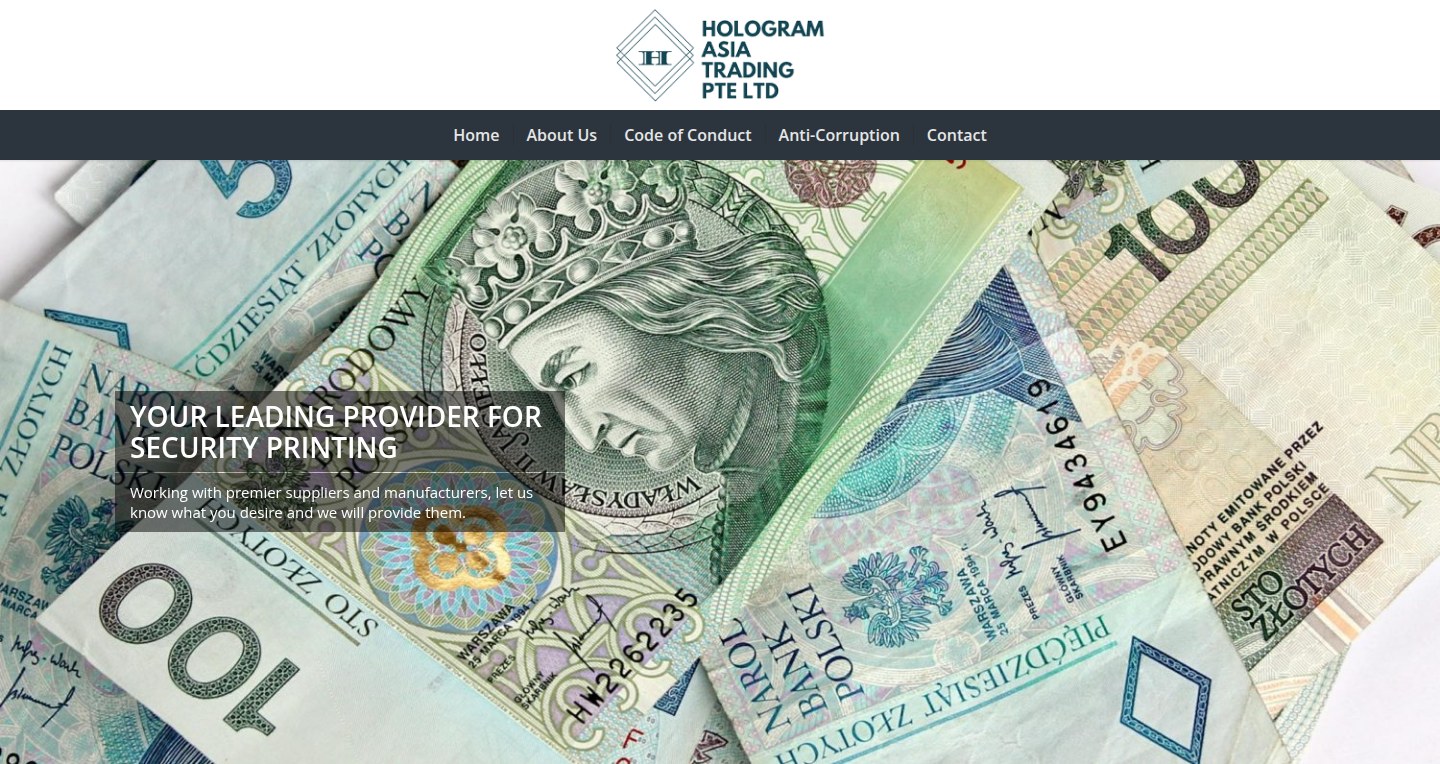
Hologram Asia Trading has three descriptions of itself.
Singapore’s company registry calls it a management consultancy. Its website says it supplies the security-printing industry: holograms for passports and banknotes. Its shipping records say something else. Since 2021 it has sent Indonesia roughly $672 million of “tactical active monitoring systems,” “compact portable active intelligent intercept” units and geolocation platforms — the trade’s names for equipment that imitates a mobile phone tower, forces every handset nearby to connect, and identifies, locates and in some configurations intercepts them.
None of the three descriptions uses the word surveillance.
Hologram Asia is the largest of a small fleet of Singapore companies that stand between Indonesia’s security agencies and the people who actually make this equipment. One of those makers is named in the customs record. In February 2026, $177.5 million of import lines carried the brand of Cognyte Software, an Israeli interception vendor listed on Nasdaq. The importer was PT Sinar Perdana Teknologi. The end user was the logistics arm of the Indonesian National Police.
Cognyte is not an unknown quantity in Indonesia. In 2021 Meta removed about a hundred accounts linked to the company and named Indonesia among its customers; the targets, Meta said, included journalists and politicians.
This article is about who stands in the middle.
The Singapore fleet
The companies present themselves as unrelated. The records say otherwise.
- Hologram Asia and Indra Consortium were incorporated six weeks apart in 2017, each with the same capital. They share a company secretary, Chng Kang Hai, appointed to each on the day it was formed. In September 2025 both appointed a new director in the same month.
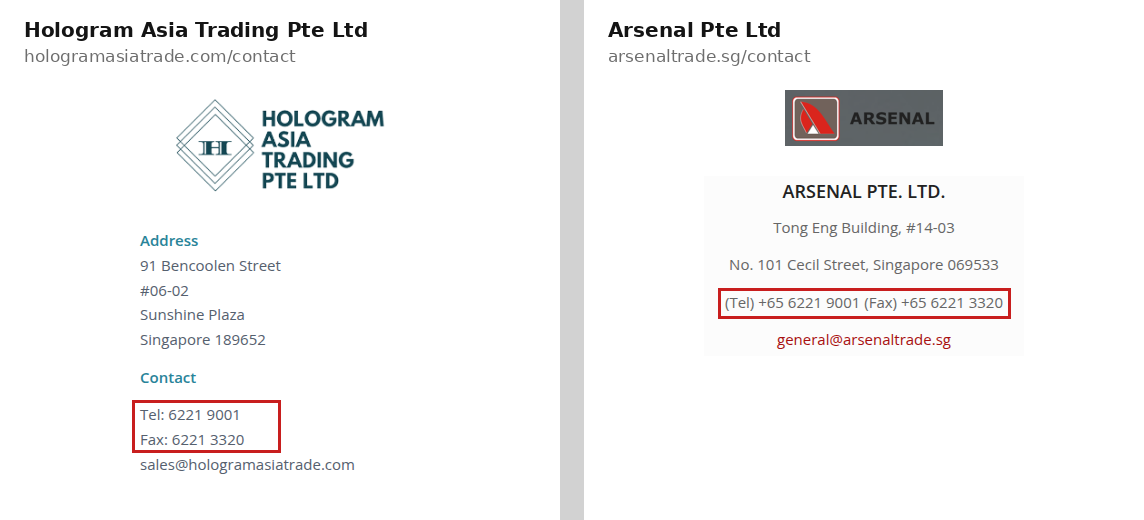
- Hologram Asia and a third firm, Arsenal, publish the same telephone and fax number from different addresses. Arsenal’s office is the unit registered to Indra Consortium.
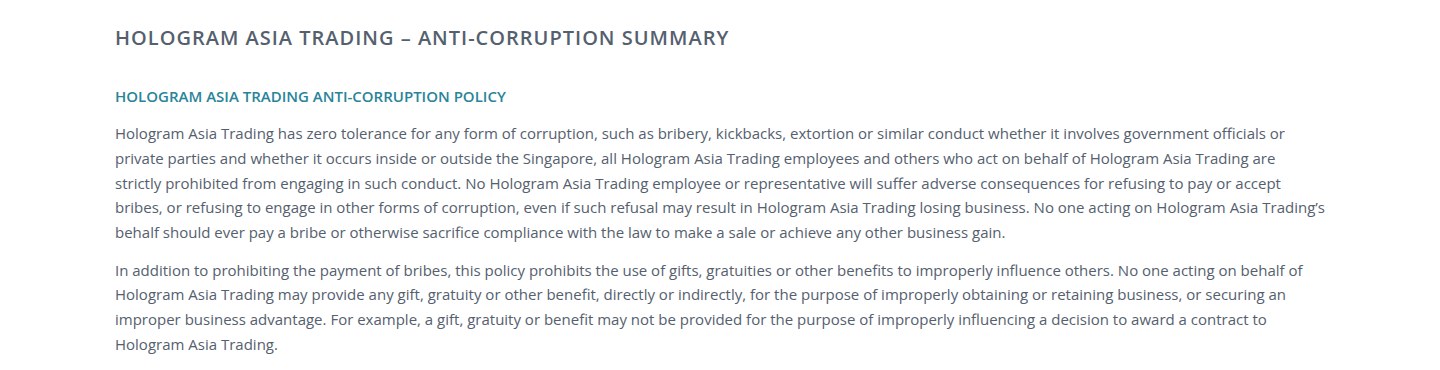
- Nine firms publish the same anti-corruption policy, word for word, including a four-question quiz and the same misspelling of “corrupt.”
- Two of them registered their websites in the same second of 6 March 2015.
Their registered owners live at ordinary Singapore home addresses. Who really owns them does not appear in any filing.
The layer is not a logistics necessity. Indonesia’s marine police buy helicopter parts straight from the Korean manufacturer. The Singapore companies appear where the purchase is interception equipment.
The Jakarta end
On the Indonesian side, the equipment is imported by a rotating set of local companies that win the police tenders.
Between 2022 and 2024 the police intelligence agency, Baintelkam, bought one product — a “hybrid surveillance car” with a portable intercept unit — seven times from three companies. PT Nenggala Karya took Java and Nusa Tenggara. PT Mulia Indonesia Muda took Kalimantan, Maluku and Papua. PT Mitrel Berkat Utama took Sumatra and the remainder of Java. No region was awarded twice. Together the three firms have won more than 9 trillion rupiah of government contracts.
Thirteen police data-analytics contracts won by the same group of firms were priced between 99.27 and 99.94 billion rupiah — every one of them just under a hundred billion. In January 2025 the Attorney General’s Office bought three surveillance systems at exactly 300 billion rupiah each, without a tender. All three went to Mulia.
On paper these companies are competitors. Reporting for this investigation has established that the people who front them are, in the main, employees of the Capitol Group.
Capitol is a Jakarta conglomerate in property, palm oil and hotels. Its headquarters stand on Jalan S. Parman in Slipi, half a kilometre from the tower where Mitrel and its parent company share an office, a director and a commissioner. Its chief executive is Jimmy Widjaja, a son of Eka Tjipta Widjaja, the founder of Sinar Mas.
His dealings with the police go back to 1992, when he worked on the computerisation of the national driving licence for a company owned by President Suharto’s eldest daughter. In 2017 Tempo profiled him under the headline Jimmy, Si Pengatur Tender — Jimmy, the Tender Arranger. He describes himself as a plantation and IT businessman.
The price
Three checks suggest the declared prices are not the real ones.
The same radar, two prices. In 2024 Indonesia’s defence ministry bought fire-control radars made by Reutech of South Africa. In October it bought direct, and Indonesia declared about $0.8 million — almost exactly what South Africa recorded exporting. In May the purchase was invoiced through a Singapore firm linked to the same fleet. South Africa again recorded about $0.8 million. Indonesia declared $11.4 million.
One broker matches, the others do not. In December 2025 a different Singapore broker shipped about $68 million of interception equipment to the police. Singapore recorded $69.0 million leaving; Indonesia recorded $69.4 million arriving. In the same month, in the category the fleet uses, Singapore recorded $4.6 million leaving and Indonesia recorded $228 million arriving. Singapore’s statistics plainly can see this kind of shipment. They do not see these.

The maker is too small. Cognyte’s revenue for its latest financial year was $400 million, worldwide. Its largest announced deal in Asia is $5 million. The $177.5 million declared in Indonesia in one month would be 44 percent of everything the company sold in a year, and a listed company would have had to disclose a customer of that size. It has not.
When a buyer declares many times what the manufacturer was paid, the difference went to someone in between. In these purchases the buyer is the state, and the equipment is classified as special material, which exempts it from normal procurement disclosure. Indonesia has no law governing when such equipment may be used on its citizens.
Jimmy Widjaja has never been charged in connection with police procurement, and no anti-corruption investigation has named him. In 2017 he denied to Tempo any role in arms importing, saying: “These are two elephants fighting; have mercy on me.” Capitol has said it operates independently of the Sinar Mas group. Mr Widjaja, the Capitol Group was approached for comment.
Sources. Indonesian customs and procurement (LPSE) records; Singapore company registry filings and the companies’ own websites; Singapore, Indonesian, South African and UN trade statistics; Cognyte’s published accounts; Meta’s 2021 threat report; Tempo; Amnesty International.